The Snippet Trap: Why Proper Training Is Never on the Clearance Rack
Every week, I hear some version of the same question from operators across hospitality, healthcare foodservice, and corporate dining: "Can my team just watch short, YouTube-style videos instead of spending real time in a training platform?"
It is a fair question, born of real pressure. Teams are lean, budgets are tight, and the calendar has no empty squares. My former partner at the French Culinary Institute, the legendary Chef Alain Sailhac, had the perfect answer for requests like this. "Of course, you can do that," he would say, with a shrug only a Frenchman can deliver. "It will not be very good, but you can do it."
He was right then, and he is right now. Proper training is never a candidate for shortcuts.
The Cost of the Revolving Door
Consider the math. Average restaurant turnover now sits above 75 percent annually, and quick-service operations can exceed 130 percent. Cornell's Center for Hospitality Research puts the average cost of each departure at roughly $5,864. For a 50-person operation, that quietly becomes a six-figure line item that never appears on the menu.
Meanwhile, LinkedIn's Workplace Learning Report found that 94 percent of employees would stay longer at a company that invested in their development. Training is not the expense that follows turnover. It is the strategy that prevents it.
Lean Teams Carry Heavier Loads
We are living in an age of power efficiency. Kitchens run with fewer hands, managers wear three hats (four, if you count the hairnet), and every team member carries more of your brand on their shoulders than ever before. When one cook covers two stations, the margin for error disappears. An undertrained employee on a lean team is not a small gap. It is a load-bearing wall with a crack in it.
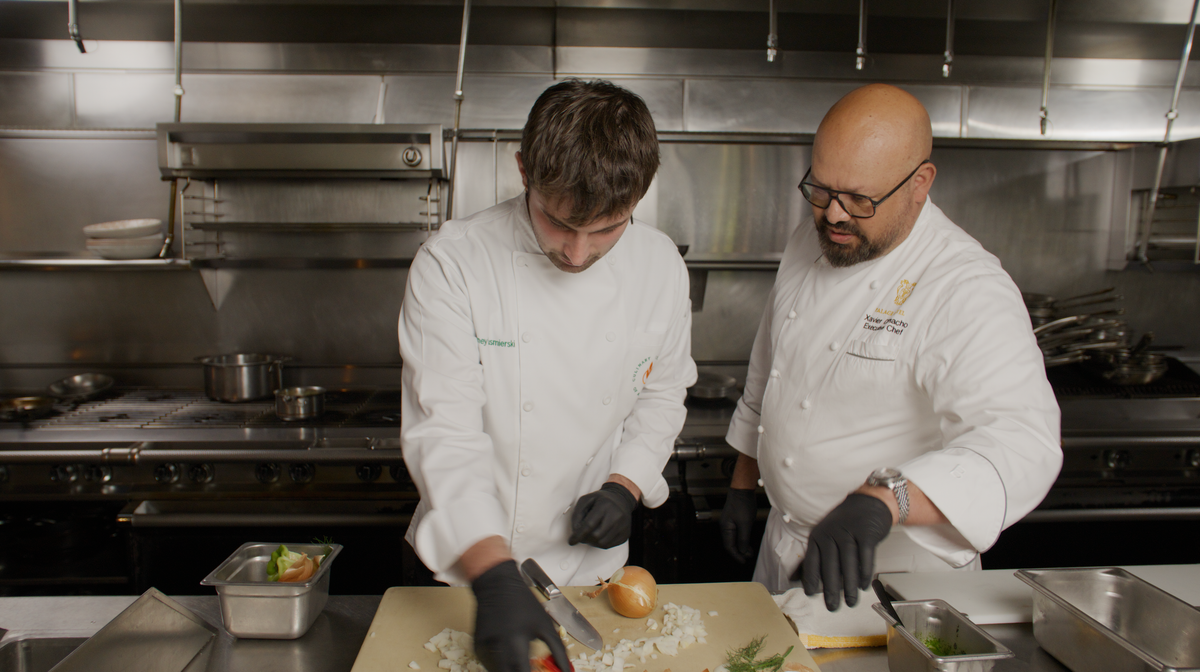
Food safety lapses, inconsistent plates, wasted product, and preventable injuries rarely announce themselves in advance. They arrive in reviews, audits, and insurance claims. A snippet can show someone how to dice an onion. It cannot build the judgment to know why the walk-in temperature matters at 6 p.m. on a Friday.
Snippets Are a Garnish, Not the Meal
Short-form content has its place. Microlearning is excellent for reinforcement, refreshers, and just-in-time reminders. But it works best on top of a real foundation: structured curriculum, sequenced skill building, assessment, and accountability. Without that foundation, you have not trained a team. You have curated a playlist.
The Good News: Doing It Right Is Now Affordable
Here is where I become the optimist in the room. The old tradeoff between quality and cost no longer applies. Online and hybrid training platforms have changed the equation entirely.
A well-designed digital curriculum lets employees learn at their own pace, on any device, in the pockets of time that actually exist in a shift. Managers track progress without hovering. Skills are verified, not assumed. Pair online learning with targeted on-site coaching, and you get the consistency of a curriculum with the nuance of a chef standing at your shoulder.
Most importantly, it scales. The same program that trains ten cooks in one kitchen can train ten thousand across a national footprint, at a per-learner cost that is a fraction of a single turnover event. At Rouxbe, we see this across government workforce programs, enterprise foodservice partners, and schools. When the foundation is right, confidence rises, retention follows, and the brand stays protected.
Train Like It Matters, Because It Does
Chef Sailhac never objected to efficiency. He objected to mediocrity dressed up as efficiency. Your team deserves better than "not very good," and so do your guests.
The shortcut is tempting. The right path is now within reach, and it costs less than the alternative. Choose the one that works.